
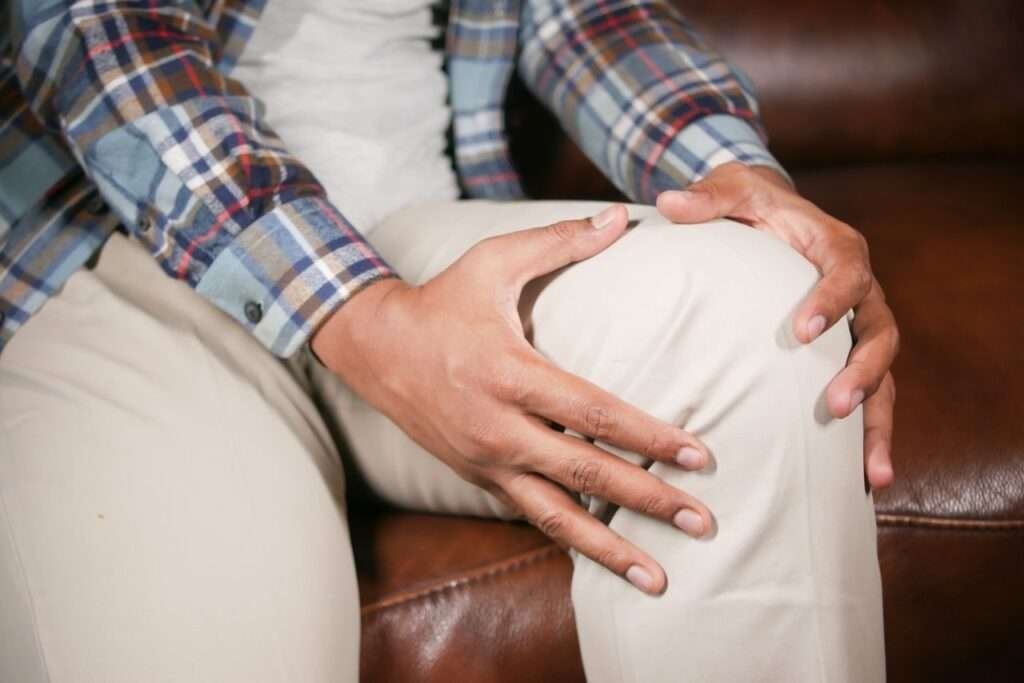
Can deep heating reduce pain and help people move better—or is it just a warm feeling? Here is what clinical research actually supports.
Clinical education article · Updated September 2026
Bottom line: promising adjunct, not a replacement for active care
Shortwave and microwave diathermy may provide short-term pain relief in selected adults with chronic knee osteoarthritis. Functional improvement is less consistent, protocols vary widely, and confidence in some estimates is low. Exercise, education, and weight management remain the foundation of care, delivered through a structured physical therapy program.
Knee osteoarthritis (OA) is more than “wear and tear.” It is a whole-joint condition associated with pain, stiffness, weakness, and reduced tolerance for walking, stairs, or prolonged standing. Diathermy uses electromagnetic energy to warm deeper tissues—or, in some pulsed protocols, to deliver energy with little perceptible heating.
- 17 trials included in a recent shortwave diathermy review
- 1,372 people represented in that pooled evidence
- Best signal: pain relief; the effect on function is less certain
What is diathermy?
Therapeutic diathermy delivers high-frequency electromagnetic energy to tissues. The two forms most often discussed for knee OA are shortwave diathermy (SWD) and microwave diathermy (MWD). SWD may be continuous or pulsed. These are not interchangeable: frequency, power, pulse characteristics, treatment time, tissue temperature, and co-interventions differ across studies.
How it is thought to work
- Energy delivery: electromagnetic energy is directed around the knee.
- Thermal response: at thermal doses, deeper tissue temperature and local circulation may rise.
- Therapy window: temporary symptom relief may make exercise and mobility more tolerable.
Proposed pathway—not proof of cartilage repair. Diathermy has not been shown to regenerate articular cartilage or reverse structural OA.
What do pooled studies show?
A 2017 meta-analysis of eight randomized trials (542 participants) found a moderate improvement in pain compared with sham or no intervention, but no statistically significant improvement in physical function. A 2012 meta-analysis similarly found small benefits for pain and muscle performance mainly when treatment produced a local thermal sensation; it found no functional-performance effect and emphasized substantial variation in dosing.
2017 pooled effect: pain improved; function did not clearly improve
Compared with sham or no treatment, shortwave therapy showed a moderate effect on pain (SMD −0.53; 95% CI −0.84 to −0.21) but no clear effect on physical function (SMD −0.16; 95% CI −0.36 to 0.05). Negative values favor diathermy.
Source: Wang et al., 2017. SMDs combine different outcome scales; they are not points on a 0–10 pain scale.
A newer review pooled 17 trials and reported improvements in pain, walking ability, function, and stiffness. Yet shortwave diathermy did not outperform ultrasound or electrotherapy overall, and the authors rated some evidence as very low certainty. Compared with “conventional therapy,” the clearest advantage was pain relief rather than walking, function, or stiffness.
The evidence base has grown—but uncertainty remains
Trials included in three systematic reviews: 7 (2012), 8 (2017) and 17 (2026).
More trials do not automatically mean high certainty. Dose variation, different comparators, small samples, and inconsistent outcome measures still limit confidence.
A notable microwave diathermy trial
In a double-blind randomized trial of 63 adults with moderate radiographic knee OA, participants received 433.92 MHz microwave hyperthermia or sham treatment for 30 minutes, three times weekly for four weeks. The active group improved in WOMAC pain, stiffness, daily activity, and Timed Up and Go measures, with benefits reported at 16 weeks. This is encouraging, but one small trial should not be generalized to every microwave device or dosing protocol.
Clinical interpretation: The most defensible role for diathermy is as a time-limited adjunct when pain or stiffness is preventing effective movement. A useful trial should have measurable targets—such as pain during stairs, walking tolerance, knee ROM, or sit-to-stand performance—and should be discontinued if it does not add meaningful benefit.
Who may be a reasonable candidate?
- An adult with chronic, symptomatic knee OA whose pain or stiffness limits exercise participation.
- A patient who has been screened for device-specific contraindications and can reliably report heat or discomfort.
- A patient receiving diathermy within a broader plan that includes progressive strengthening, aerobic activity, education, and—when appropriate—weight-management support.
What diathermy should not promise
- Not cartilage regrowth
- Not disease reversal
- Not a stand-alone cure
- Not universally appropriate
Symptom change and structural change are different outcomes. Current studies focus mainly on pain and function; they do not establish regeneration of cartilage or prevention of future joint replacement.
Safety first
Diathermy must be delivered by a trained clinician using the device manufacturer’s instructions. Electromagnetic energy can interfere with implanted electronic systems and can cause excessive heating or burns.
- Do not use in a patient with an implanted pacemaker, neurostimulator, or implanted lead unless the applicable device guidance explicitly permits it; many manufacturers contraindicate diathermy anywhere on the body.
- Screen carefully for pregnancy, metal in or near the treatment field, impaired sensation or circulation, active bleeding, infection, malignancy in the treatment region, and inability to communicate heat or discomfort.
- Contraindications differ by device and thermal versus nonthermal protocol. The operator manual and patient’s implant guidance take priority over a generic list.
How to combine it with evidence-based rehabilitation
- Set a baseline: pain rating, WOMAC/KOOS, gait speed or Timed Up and Go, functional strength, and a patient-specific activity.
- Use the symptom window: follow diathermy with knee mobility, quadriceps and hip strengthening, balance, and graded walking or cycling.
- Reassess quickly: judge value over a short episode, not by warmth alone. Continue only if gains are measurable and meaningful.
- Build self-management: progress the home program so long-term improvement does not depend on a clinic modality.
The practical answer
Diathermy may reduce pain for some people with chronic knee OA, particularly with an adequately dosed thermal or pulsed protocol. It is best used to support active rehabilitation—not replace it.
Living with knee arthritis? See the conditions we treat, read what to expect at your first physical therapy visit, or request an appointment at a clinic in Plainfield, Union, Bernardsville or Flushing. For pain that persists despite rehab, our pain management team can help.
References
- Wang H, et al. Effects of short-wave therapy in patients with knee osteoarthritis: a systematic review and meta-analysis. Clinical Rehabilitation. 2017.
- Laufer Y, Dar G. Effectiveness of thermal and athermal short-wave diathermy for the management of knee osteoarthritis. Osteoarthritis and Cartilage. 2012.
- Zhang S, et al. Shortwave diathermy for managing knee osteoarthritis: a systematic review with meta-analysis. 2026.
- Giombini A, et al. Localized hyperthermia induced by microwave diathermy in osteoarthritis of the knee. Knee Surgery, Sports Traumatology, Arthroscopy. 2011.
- American Academy of Orthopaedic Surgeons. Management of Osteoarthritis of the Knee (Non-Arthroplasty) Clinical Practice Guideline. 2021.
- U.S. Food and Drug Administration. Diathermy: device overview and inspection guidance.
Medical disclaimer: This article is educational and does not replace individualized evaluation, diagnosis, or treatment. Treatment selection should reflect the patient’s history, implant status, goals, examination findings, clinician judgment, and device-specific safety instructions.